Guillermo Solis
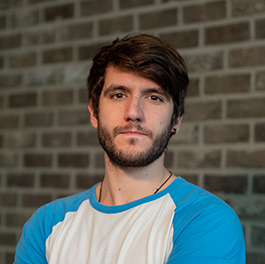
Oncoproteomics and 3D culture as tools to understand and prevent CRC metastasis
Started on October, 2023
email Guillermo Solis
Cancer metastasis is the main cause of cancer associated death, the dissemination and spreading of tumoral cells from its original niche makes treatment and eradication of the malignancy almost impossible. We want to gain further insights into colorectal cancer (CRC) metastasis and this way find new diagnostic tools that allow for the early detection of CRC tumours before they have the chance to colonize other tissues. We will evaluate the diagnostic potential of proteins identified as upregulated in CRC metastatic cell lines during my PhD. We will evaluate their diagnostic and screening capacity using sera of control and CRC patients as well as patient tissue microarrays. In parallel, to understand the role of these markers in the progression and onset of CRC we will edit and label them to follow their activity real-time in living cells. Additionally, we will study the role of the mechanical environment around CRC tumour cells in the progression of the disease and try to understand how cells sense and are affected by mechanical cues. Furthermore, we will also characterize at the proteomic level CRC cells differentiated in 3D to discover new possible markers that might have been overlooked so far because of the usage of 2D culture conditions. Taking advantage of the tuneable and biomimetic properties of synthetic hydrogels, we will investigate how the mechanical and chemical cues of the matrix can influence metastasis.
Publications
Haoxiang Zhang, Guillermo Solís Fernández, Boris Louis, Sarah Vorsselmans, Johan Hofkens, Paul HJ Kouwer, Hongbo Yuan, Susana Rocha
Deposited in bioRxiv (see link)
Group paper
Maria Bravo, Guillermo Solís-Fernandez, Sandra Krzyzowska, Steven Huysecom, Ana Montero-Calle, Indra Van Zundert, Boris Louis, Rodrigo Barderas, Betrice Fortuni, Susana Rocha
Published in Journal of Nanobiotechnology, April 2026 (see publication in Journal )
Deposited in bioRxiv (see link)
Group paper
Steven Huysecom, Kiki Schouwstra, Samet Aytekin, Natalie Neyrinck, Yana Heyvaert, Boris Louis, Susana Rocha, Guillermo Solís-Fernandez
Published in Chemical & Biomedical Imaging, April 2026 (see publication in Journal or Research Gate )
Deposited in bioRxiv (see link)
Group paper
Nina Anseeuw, Carmen Escalona-Noguero, Giel Vankevelaer, Samet Aytekin, Olivier De Wever, Ilaria Elia, Susana Rocha, Guillermo Solís-Fernández
Deposited in bioRxiv (see link)
Group paper
Charlotte Cresens, Ana Montero-Calle, Guillermo Solís Fernández, Behrad Shaghaghi, Lotte Gerrits, Paul Kouwer, Rodrigo Barderas, Susana Rocha
Published in Molecular & Cellular Proteomics, January 2026 (see publication in Journal )
Deposited in bioRxiv (see link)
Group paper
Charlotte Cresens, Guillermo Solis-Fernandez, Astha Tiwari, Rik Nuyts, Johan Hofkens, Rodrigo Barderas, Susana Rocha
Published in iScience, August 2023 (see publication in Journal or Research Gate )
Deposited in bioRxiv (see link)
Group paper
Guillermo Solís-Fernández, Ana Montero-Calle, Javier Martínez-Useros, Álvaro López-Janeiro, Vivian de los Ríos, Rodrigo Sanz, Jana Dziakova, Elena Milagrosa, María Jesús Fernández-Aceñero, Alberto Peláez-García, José Ignacio Casal, Johan Hofkens, Susana Rocha, Rodrigo Barderas
Published in Cells, January 2022 (see publication in Journal )
Danai Laskaratou, Guillermo Solís Fernández, Quinten Coucke, Eduard Fron, Susana Rocha, Johan Hofkens, Jelle Hendrix, Hideaki Mizuno
Published in Nature Communications, May 2021 (see publication in Journal or Research Gate )