
FRET-based molecular sensors: our Pandora box…
How do cells feel force?
There are many ways to (try to) answer that question.
We thought molecular tension sensors would be one of the best ways to do it.
A donor, an acceptor, a molecular spring, a FRET readout… how hard can it be? 😅
As it turns out, sometimes the hardest part of science is not collecting data.
It is understanding what the data is actually telling you.
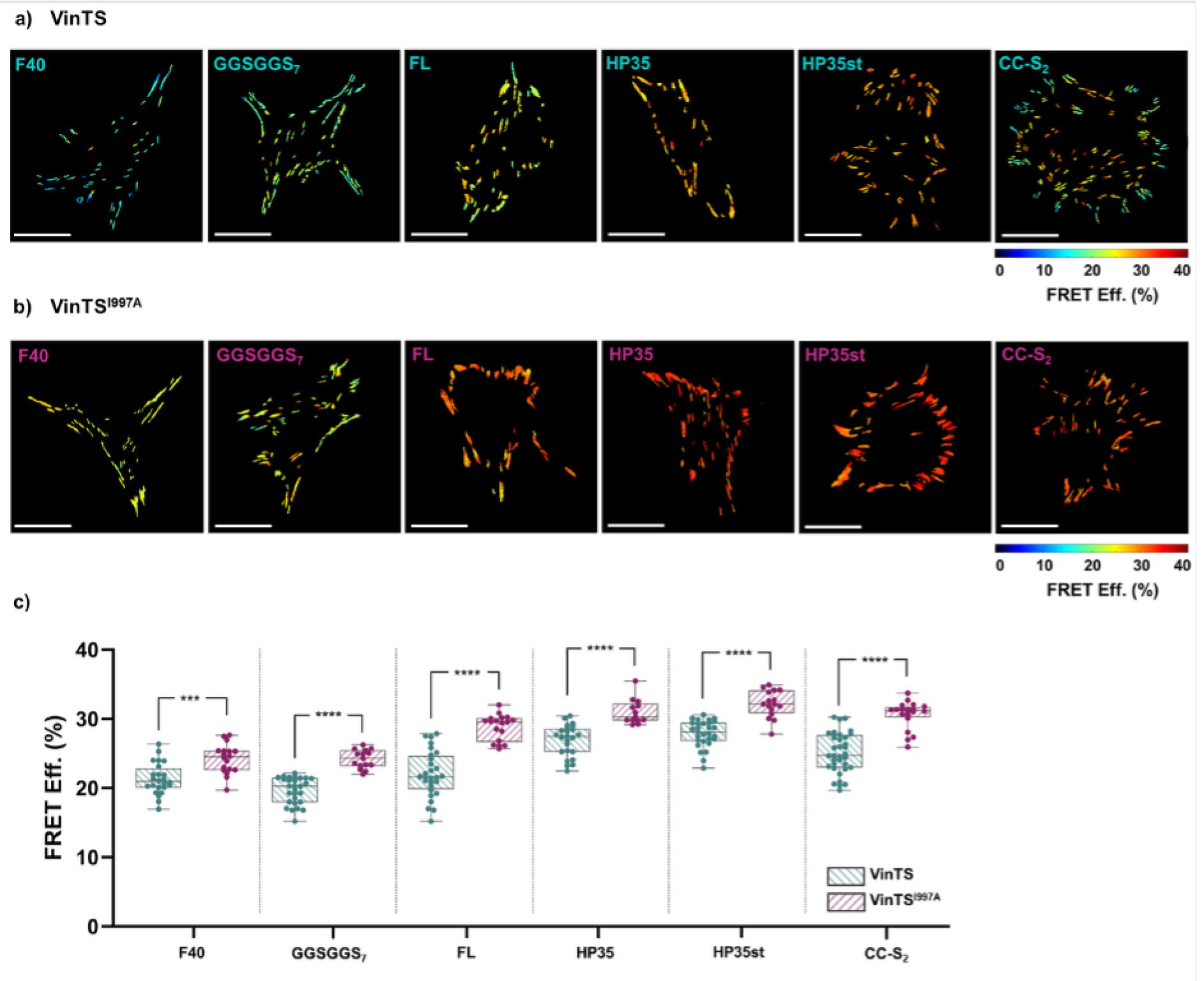
In this work, we systematically compare a panel of FRET-based vinculin tension sensors under identical conditions using FLIM. By examining unloaded reference constructs, fluorophore pairs, mechanical sensor modules, and circularly permuted variants, we show that the signal is shaped not only by force but also by the probe itself.
We hope these comparisons and insights will help others working with molecular tension sensors, FRET/FLIM, and mechanobiology, both when interpreting existing results and when designing the next generation of probes.
Huge kudos to Samet for pushing this work forward, and thanks to the rest of the team for all the effort. This project really feels like the culmination of years of trial, error, and scientific stubbornness…
📄 Read the paper here.